James Andean · women’s wholesale wear
Women’s Fashion Clothes: A Practical Wardrobe Guide

By Ruth Keller
A useful wardrobe supports the life you lead. It should make ordinary mornings easier, provide suitable options for different settings and feel comfortable for more than a few minutes. That does not require a large collection. A smaller group of well-fitting clothes can cover work, weekends, travel and social occasions when the colours, shapes and layers work together.
Begin with your real routine
Before buying anything, consider how you spend a typical fortnight. Someone who works from home, walks often and attends occasional dinners needs different clothes from someone whose week involves formal meetings or outdoor work. Divide your time into broad settings, then check whether your wardrobe serves the most frequent ones.
A simple audit can reveal what is missing. Take everything from one category, such as trousers or knitwear, and try each item on. Keep pieces that fit now, feel comfortable and combine with other clothes. Set aside anything that needs a small repair or alteration. Clothes that no longer suit your needs should not determine future purchases merely because they once seemed useful.
Photograph a few outfits that work well. Look for repeated features: perhaps you favour straight trousers, open necklines, soft layers or a limited colour palette. These patterns form a practical personal style. You do not need to give it a label.
Build a flexible foundation
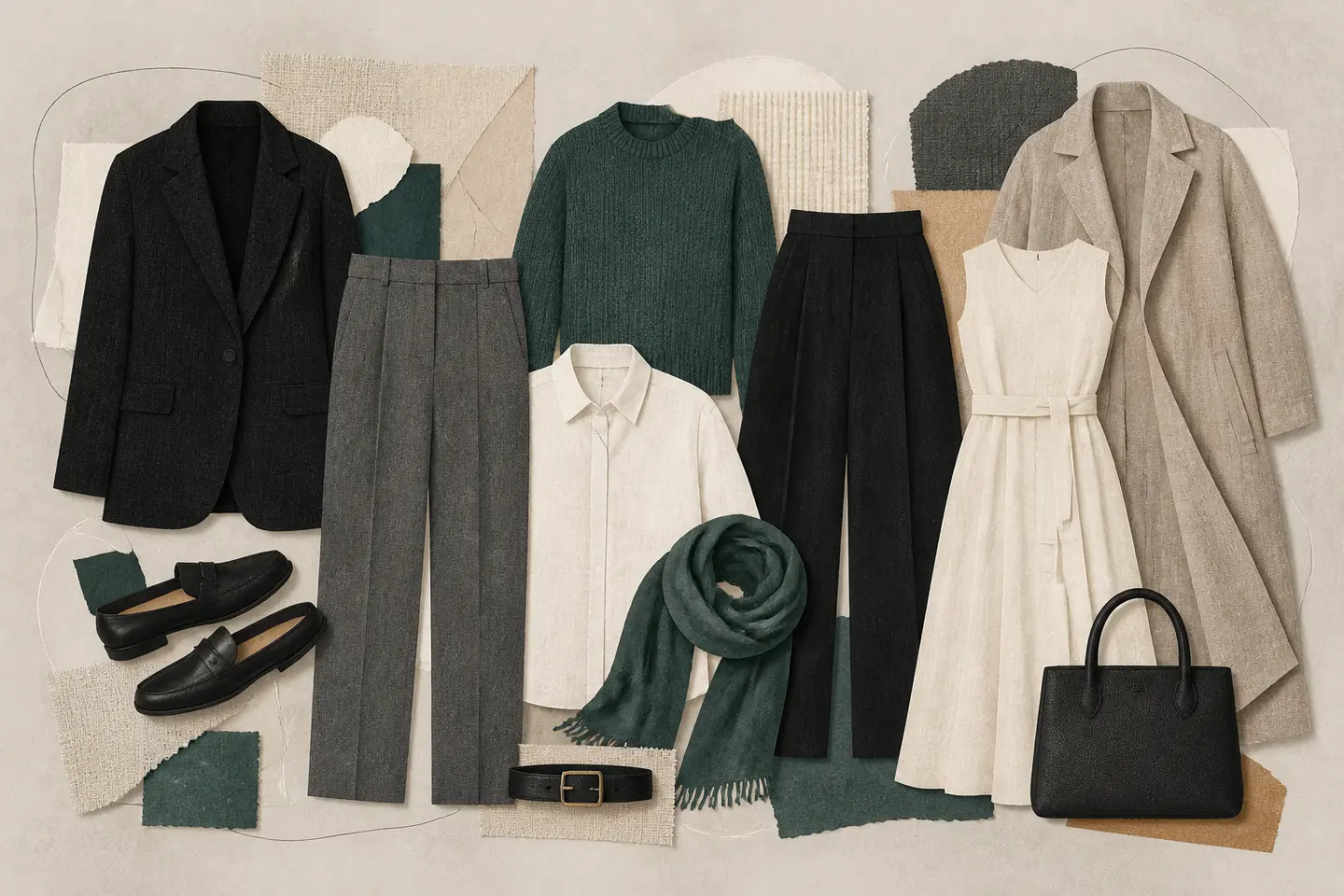
Foundation pieces are simply the clothes that support many outfits in your own wardrobe. They might include dark jeans, plain trousers, a comfortable skirt, a shirt, two knitwear options, a jacket and an easy dress. Choose the categories you genuinely wear rather than buying a standard checklist.
Versatility depends on compatibility. Before adding an item, picture at least three complete outfits using clothes and shoes you own. Include the required underwear, coat and bag in that check. A blouse that only works with one skirt, or trousers that require shoes you dislike wearing, may be less useful than they first appear.
Judge fit through movement
A size label is only a starting point. Cut, fabric and construction vary, so assess how a garment behaves on your body. Sit, reach, bend and walk when trying it on. Waistbands should remain comfortable, pockets should lie reasonably flat and sleeves should allow natural movement. Check the back as well as the front.
Good fit does not mean every item must follow the body closely. A relaxed shirt can drape without pulling across the shoulders, while a loose dress can still have a deliberate shape. With tailored clothes, look for clean shoulder lines, closures that sit without strain and hems that fall evenly.
Proportion is adjustable rather than fixed. If both halves of an outfit feel bulky, define one area by tucking a top, shortening a layer or showing the ankle or wrist. Wide trousers often work with a neater top, while a full blouse can balance straight trousers or a narrow skirt. These are options, not rules; comfort and the effect you prefer come first.
Choose fabrics for the job
Read the fibre label, but also handle the cloth. Weight, weave and finish affect comfort as much as fibre content. Cotton can be crisp or soft; wool can be fine or substantial. Linen is breathable but creases readily, while a small amount of elastane can help close-fitting clothes recover their shape.
Consider where and when the garment will be worn. Breathable woven fabrics and lightweight knits are useful in warm conditions. In colder weather, several adjustable layers are often more practical than one very heavy piece. A base layer, knit and weather-resistant outer layer allow you to respond to indoor heating and changing temperatures.
Check care needs before purchasing. If an item requires treatment you cannot provide conveniently, it may spend more time unworn than expected. Pale fabrics, delicate surfaces and loose weaves may also be impractical for commuting, caring responsibilities or frequent travel. Suit the material to the task rather than expecting careful handling to change your routine.
Check construction and likely wear
Price alone does not establish quality. Inspect the garment in good light. Seams should be even, hems secure and fastenings firmly attached. Open and close zips, check that buttonholes are finished and look for reinforcement around pockets and belt loops. On patterned fabric, major lines should meet neatly where this affects the overall appearance.
Think about the points that will receive friction. Inner thighs, elbows, cuffs, bag-contact areas and the front edges of knitwear often show wear first. Very thin fabric may be suitable for occasional layering but less suitable for repeated use. A lining can improve the way a jacket or skirt hangs, although it should not twist or restrict movement.
Use colour, print and texture deliberately
A connected colour palette makes dressing simpler without limiting you to neutrals. Identify two or three colours already common in your wardrobe, then add accents that work with them. When comparing a new item, place it beside your coats, trousers and shoes rather than judging it alone under shop lighting.
Prints are easiest to combine when they share a colour or differ clearly in scale. A narrow stripe can sit beside a larger check, for example. If two patterns compete, use one over a smaller area or separate them with a plain layer. Texture offers quieter contrast: denim with fine knitwear, matte wool with smooth fabric or crisp cotton with soft suede.
Dress for the setting
The practical questions are where you are going, what you will do and how the temperature may change. For everyday wear, a simple base such as trousers and a knit can shift in formality through the outer layer, shoes and accessories. A structured jacket and loafers make it sharper; a soft cardigan and trainers make it more relaxed.
For an event, check the venue, time of day and stated dress code. A refined dress is one option, but tailored trousers with a blouse or a coordinated skirt and jacket can work equally well. Test the full outfit beforehand, including underwear, hosiery, coat and shoes. Sit and walk in it so that an avoidable discomfort does not appear during the event.
Accessories should solve a need or add a clear point of interest. Select a bag that holds what you must carry, shoes suitable for the distance and surface, and jewellery that does not catch on clothing. One noticeable element often has more impact than several pieces competing for attention.
Shop with a plan
Keep a short list based on actual gaps, such as “warm trousers that work with flat boots” rather than “new winter clothes”. Record useful details, including preferred rise, inseam, neckline and fabric. This makes comparisons more objective and reduces the chance of buying a near-duplicate that does not solve the problem.
When trying something on, ask:
- Does it fit comfortably during normal movement?
- Can I make three complete outfits with what I own?
- Is the fabric suitable for the weather and activity?
- Can I follow the care instructions in practice?
- Would I choose it without needing another purchase?
Pause if the answer to several questions is no. An item does not become useful merely because it is attractive on its own. Compare purchases by likely use, durability and care rather than price alone. Replacing a worn daily item may deserve priority over an occasion piece with no planned occasion.
Care for clothes consistently
Follow the care label and wash only when needed. Airing clothes, brushing outerwear and treating small marks promptly can reduce unnecessary washing. Fasten zips, empty pockets and turn dark or decorated items inside out before cleaning when appropriate. Avoid excessive heat, which can shrink fibres, weaken elastane and set some stains.
Store knitwear folded so that it does not stretch at the shoulders. Hang structured garments on supportive hangers and give damp clothes space to dry fully before putting them away. Let shoes dry between wears, clean off dirt and use suitable support if the material benefits from it.
Deal with minor damage early. Sew on loose buttons, close small seam openings and have worn heels or hems repaired before the damage spreads. At the change of season, review what was worn and note any gaps. That brief record will make the next purchase more focused and keep the wardrobe centred on clothes that earn their place.